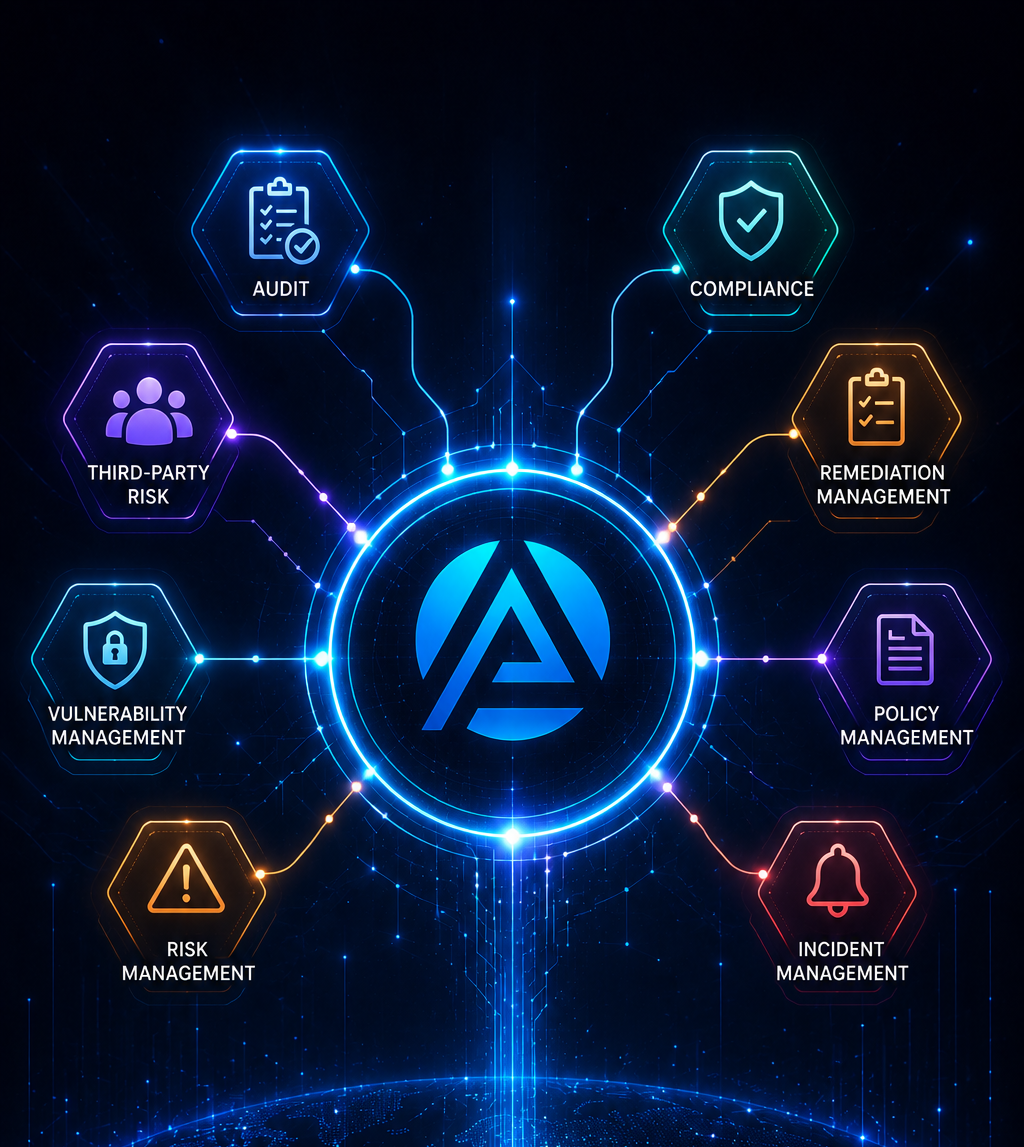







Enterprise security teams rely on multiple technologies to identify vulnerabilities, detect threats and assess cyber risk. The challenge begins after a security finding is created. Ownership must be assigned, remediation coordinated, evidence maintained and progress reported.
As cybersecurity programs grow, coordinating this work becomes just as important as identifying the risk itself.
Security teams spend valuable time coordinating remediation and following up across multiple teams.
Security findings, ownership, and audit evidence remain spread across multiple systems.
Without centralized ownership and SLA tracking, security findings remain open longer.
Every Security Finding Becomes Structured Work
Security activities are managed across spreadsheets, emails, ticketing systems, and multiple security tools.
Security leaders lack a unified view of remediation, ownership, and audit readiness.
Evidence collection often becomes a manual exercise before every audit.
Tracking ownership, due dates, and validation across teams is difficult.
Remediation • Internal Audits • Evidence • Third-Party Risk • Exceptions • Executive Reporting • Ownership • SLA Management
ASPIA doesn't replace your security technologies. It coordinates the people, processes and workflows required to reduce cyber risk.
Most organizations already have the security technologies they need. The challenge begins after a security finding is created. Ownership must be assigned. Remediation coordinated. Evidence maintained. Progress reported. ASPIA brings these activities together through one connected cybersecurity operations platform—helping security teams move every finding from identification to resolution with clear ownership, accountability and visibility.
Coordinate cyber risk, remediation, audits, evidence and executive reporting through one connected operational platform designed for accountability, remediation governance, and executive visibility.
Coordinate cyber risk, remediation, audits, evidence and executive reporting through one connected operational platform.
Manage enterprise audit, risk, third-party risk, vulnerability remediation, key risk indicators, exception management, application security, and incident management programs through structured governance lifecycles, accountability, ownership tracking, SLA management, and executive visibility.
Risk Assessment → Planning → Execution → Observations → Action Plans → Validation → Closure
Supports risk assessments, audit planning, audit programs, data requests, observations, action plans, remediation tracking, validation, and reporting.
Risk Identification → Assessment → Treatment → Ownership → Review → Reporting
Enterprise risk registers, KRIs, treatment plans & executive dashboards
KRI Definition → Threshold Monitoring → Breach Detection → Review → Action Planning → Reporting
Monitor enterprise risk exposure through KRIs, threshold management, breach tracking, escalation workflows, trend analysis, and executive reporting.
Request → Review → Approval → Compensating Controls → Expiry → Closure
Policy exception tracking with approval workflows & expiry management
Vendor Onboarding → Tiering → Assessment → Findings → Remediation → Reassessment
Supports vendor onboarding, tiering, assessments, findings management, remediation tracking, approvals, and reassessments.
Vulnerability Intake → Prioritization → Assignment → Remediation → Validation → Closure
Vulnerability remediation with ownership, SLA, and validation tracking.
Assessment → Findings → Prioritization → Assignment → Remediation → Validation
Coordinate application security findings from assessments through ownership assignment, remediation tracking, validation, and governance reporting.
Detection → Investigation → Assignment → Resolution → Closure
Security incident tracking with SLA-based resolution workflows
Cybersecurity programs involve multiple teams with different responsibilities.
ASPIA gives each stakeholder the visibility, ownership and operational workflows they need while keeping the entire cybersecurity program aligned.
Coordinate remediation, ownership and operational workflows from one connected platform.
Maintain continuous evidence and improve audit readiness throughout the year.
Track cyber risk, policy exceptions and governance activities with consistent processes.
Receive clear ownership, priorities and remediation tracking without relying on spreadsheets.
Monitor cyber risk, remediation progress and program performance through real-time dashboards.
Coordinate vendor assessments, findings and remediation from one operational workspace.
Every stakeholder works differently. ASPIA keeps every cybersecurity activity connected.
ASPIA is designed to fit into enterprise security environments, integrating with existing technologies while supporting the governance, operational, and security requirements of modern organizations. Whether deployed in the cloud or on-premises, ASPIA provides the controls, integrations, and operational flexibility needed to support enterprise cybersecurity programs.
Connect ASPIA with vulnerability scanners, security platforms, ITSM solutions, identity providers, and business applications using REST APIs.
Support Single Sign-On (SSO) and enterprise identity providers to simplify access management and strengthen security.
Define permissions based on teams, responsibilities, and organizational structure to ensure users access only the information relevant to their role.
Maintain a complete history of user activities, approvals, workflow changes, and administrative actions for operational transparency and audit support.
Standardize approvals, assignments, notifications, escalations, and operational processes across cybersecurity teams.
Deploy ASPIA in the cloud or on-premises to align with your organization's infrastructure, security, and data residency requirements.
Designed to support business-critical cybersecurity operations with reliable performance and resilient deployment architectures.
Built to support organizations operating under ISO 27001, NIS2, DORA, NIST CSF, CIS Controls, and other established cybersecurity and governance frameworks.
Integrate with vulnerability scanners, ticketing platforms, identity providers, and enterprise business systems without replacing the technologies you already rely on.
ASPIA integrates with the technologies your security teams already rely on, allowing you to improve cybersecurity operations without replacing existing investments.






Additional integrations available through REST APIs and enterprise connectors.
Allows organizations to improve remediation operations without replacing their current security stack.
Organizations across regulated industries face the same operational challenge—coordinating remediation, audits, evidence, and governance across multiple teams and systems. ASPIA provides one connected platform to manage cybersecurity operations while supporting industry-specific regulatory and security requirements.
Coordinate vulnerability remediation, internal audits, third-party risk, and executive reporting while supporting DORA, NIS2, and ISO 27001.
Improve operational visibility across remediation, audit activities, policy exceptions, and third-party risk while maintaining continuous governance and compliance readiness.
Manage cybersecurity operations across fast-moving development and security teams with structured remediation workflows, clear ownership, and executive reporting.
Coordinate vulnerability remediation across production environments, suppliers, and business units while improving operational visibility and supporting NIS2 and ISO 27001 initiatives.
Support cybersecurity operations across clinical, IT, and compliance teams with continuous evidence management, remediation tracking, and audit readiness.
Standardize vulnerability remediation, customer audit support, security evidence, and executive reporting while integrating with existing security and development tools.
Supporting Organizations Operating Under
Whether you're evaluating ASPIA to improve vulnerability remediation, internal audits, cyber risk management or overall cybersecurity operations, these are the questions security leaders ask most often.


ASPIA is an Enterprise Governance, Risk & Security Operations Platform that helps organizations execute governance programs through accountable workflows, remediation tracking, and executive visibility.