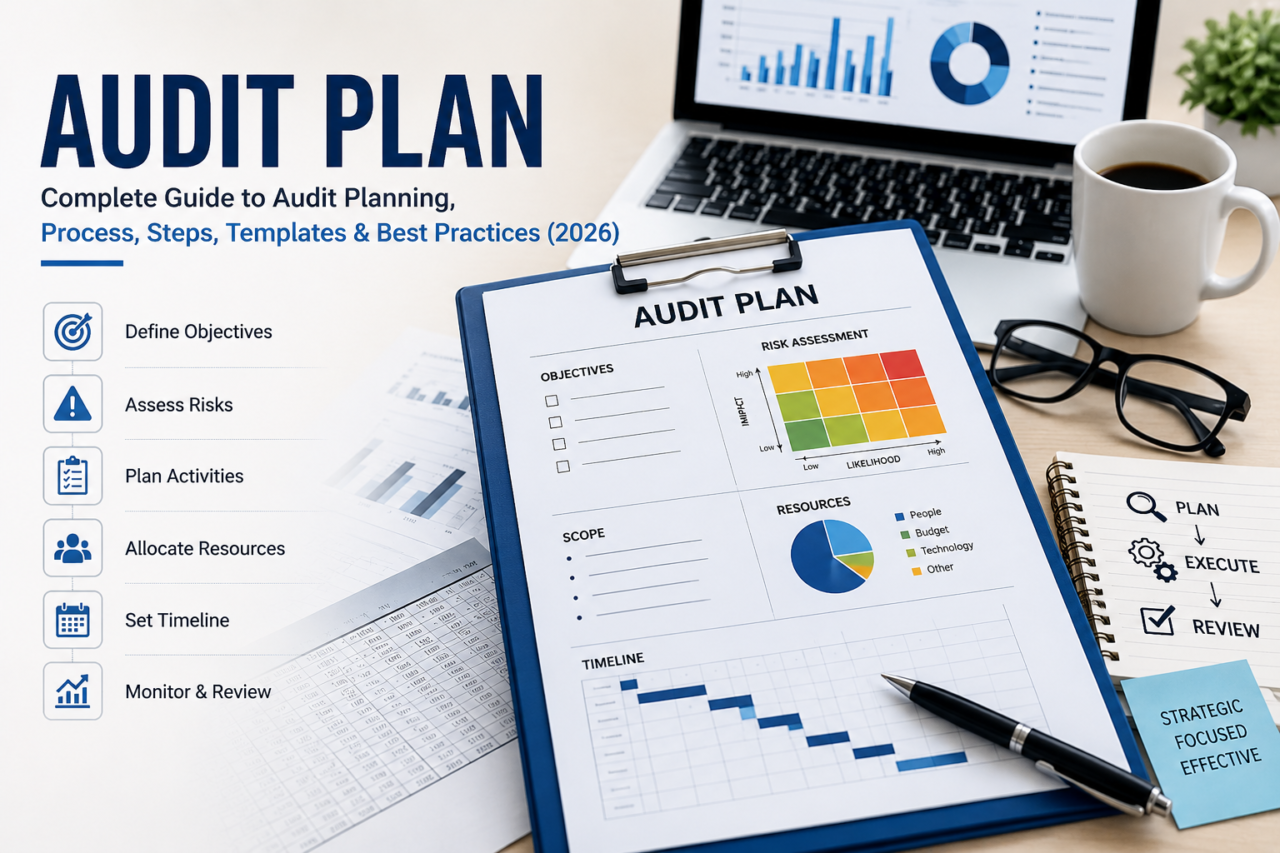
What is an Audit Plan?
An audit plan is a documented roadmap that outlines the overall strategy, scope, objectives, resources, timeline, and detailed procedures for conducting an audit engagement. It transforms high-level audit strategies into actionable steps that guide the audit team from planning through to reporting and follow-up.
Featured Snippet — What is an Audit Plan?
An audit plan is a comprehensive document that outlines the overall strategy, scope, objectives, resources, timeline, and detailed procedures for conducting an audit engagement.
Key Components of an Audit Plan
- Scope: Boundaries of what will and won’t be audited
- Objectives: What the audit aims to achieve
- Resources: Staffing, budget, and technology allocation
- Timeline: Milestones and deadlines
- Methodology: Procedures and techniques to be used
- Risk Assessment: Identified risks and planned responses
- Deliverables: Outputs and reports
Why Organizations Need an Audit Plan
Why Audit Planning Matters
Operational Benefits
- Workflow clarity
- Resource efficiency
- Reduced rework
- Better coordination
Compliance Benefits
- Regulatory alignment
- Audit trail documentation
- Standard adherence
- Board reporting
Risk Reduction
- Proactive identification
- Comprehensive coverage
- Prioritized action
- Continuous monitoring
Executive Visibility
- Strategic insight
- Informed governance
- Decision support
- Value demonstration
Objectives of Audit Planning
1. Focus on Important Areas
Direct appropriate attention to significant and high-risk areas. Example: An insurance company’s risk assessment identifies cybersecurity as a top risk, allocating 30% of resources to IT security audits.
2. Identify and Resolve Problems Early
Detect and address issues before fieldwork begins. Example: During planning for a supply chain audit, the team discovers incomplete vendor documentation and includes procedures to obtain missing information.
3. Organize and Manage Effectively
Structure the audit for efficient execution. Example: A global manufacturing audit coordinates site visits across three continents with staggered timing to leverage team expertise.
4. Select and Assign the Right Team
Match skills to audit requirements. Example: A complex derivatives audit assigns team members with specialized financial instruments expertise and valuation experience.
5. Facilitate Direction, Supervision, and Review
Enable proper oversight of audit work. Example: The plan includes weekly manager reviews, partner checkpoints, and quality assurance reviews at key milestones.
6. Coordinate with Other Teams
Integrate work of specialists and other assurance providers. Example: An IT audit coordinates with external cybersecurity experts for penetration testing, ensuring their work aligns with the overall audit approach.
Types of Audit Plans
Annual Audit Plan
Comprehensive plan covering all planned audit activities for a fiscal year.
Internal Audit Plan
Focuses specifically on internal audit function activities aligned with IIA Standards.
Operational Audit Plan
Examines operational efficiency and effectiveness.
IT Audit Plan
Addresses technology, cybersecurity, and data risks.
Compliance Audit Plan
Ensures adherence to laws, regulations, and policies.
Risk-Based Audit Plan
Prioritizes audits based on organizational risk profile.
Vendor Audit Plan
Focuses on third-party and supplier risks.
Project Audit Plan
Designed for specific projects or initiatives.
How to Create an Audit Plan in 10 Steps
Step 1: Understand the Organization
Review strategic plans, board minutes, and management reports. Identify key initiatives, changes, and challenges. Map regulatory and compliance obligations.
Step 2: Define the Audit Universe
Create comprehensive inventory of all auditable entities—business units, processes, locations, systems, legal entities, and projects. Categorize by type, size, complexity, and materiality.
Step 3: Conduct Risk Assessment
Identify risks for each audit entity. Assess likelihood and impact using consistent methodology. Consider existing control effectiveness. Document risk assessment rationale.
Step 4: Prioritize Auditable Areas
Rank entities by risk score and criticality. Consider time since last audit. Factor in organizational changes. Balance coverage across areas.
Step 5: Determine Audit Objectives
Define specific, measurable objectives for each engagement. Link to identified risks. Align with organizational strategy. Document expected outcomes.
Step 6: Define Audit Scope
Specify what will and won’t be audited. Define time period covered. Identify locations and entities included. Document any limitations or constraints.
Step 7: Allocate Resources
Identify required skills and expertise. Match staff capabilities to engagement needs. Address skill gaps through training or external resources. Allocate budget and technology.
Step 8: Develop Timeline
Create project schedule with key milestones. Define fieldwork dates for each engagement. Set reporting deadlines. Build in review and quality assurance time.
Step 9: Develop Detailed Procedures
Define specific procedures for each audit area. Design tests of controls and substantive procedures. Determine sampling methodology. Plan data analytics usage.
Step 10: Obtain Approval and Communicate
Present draft plan to stakeholders for feedback. Present to audit committee for approval. Communicate approved plan to audit team, management, and stakeholders.
Components of an Audit Plan
Audit Plan vs. Audit Program vs. Audit Strategy
Risk-Based Audit Planning
Risk-Based Audit Planning is a systematic approach that focuses audit resources on areas of highest risk and potential impact. Rather than auditing every area on a fixed cycle, RBIA prioritizes based on:
- Risk severity and likelihood
- Organizational strategy and objectives
- Control effectiveness
- Emerging threats
- Regulatory requirements
Risk Categories in Banking Example
Annual Audit Planning Process
Audit Planning Checklist
Phase 1: Pre-Planning
- Review previous audit results
- Understand organizational strategy
- Identify key stakeholders
- Assess changes in business environment
- Review regulatory requirements
Phase 2: Audit Universe
- Update audit universe
- Remove obsolete entities
- Ensure completeness of coverage
- Document attributes
Phase 3: Risk Assessment
- Identify risks for each entity
- Assess likelihood and impact
- Consider control effectiveness
- Prioritize risks consistently
- Document rationale
Phase 4: Planning
- Develop plan based on risk priorities
- Define objectives and scope
- Allocate resources
- Develop timelines
- Identify dependencies
Phase 5-6: Approval & Communication
- Present to senior management
- Present to audit committee
- Incorporate feedback
- Obtain final approval
- Communicate to team and stakeholders
Phase 7: Monitoring
- Track progress against plan
- Monitor emerging risks
- Review resource utilization
- Report status to management
- Update plan as needed
Audit Plan Examples by Industry
Banking Example
Organization: Global Bank (Assets: $500B, 50,000+ employees)
Top Risk Priorities: Cybersecurity, AML/CFT, Credit Risk, Regulatory Compliance, Third-Party Risk
Total Staff
45
Budget
$8.5M
High-Risk Completion
100%
Issue Closure
90%
Common Audit Planning Mistakes
Insufficient Risk Assessment
Rushing through risk assessment without adequate stakeholder input → Resources misallocated to low-risk areas.
Rigid and Inflexible Planning
Creating a fixed plan that can’t adapt to emerging risks → Missing critical issues, reactive rather than proactive.
Overlooking Stakeholder Input
Failing to engage management, board, and other stakeholders → Missing key risks, low stakeholder buy-in.
Underestimating Resources
Not allocating enough time, budget, or expertise → Audits are rushed, incomplete, or poor quality.
Not Coordinating with Other Functions
Duplicating work with compliance, risk, or external audit → Wasted resources and inefficient coverage.
Not Aligning with Business Strategy
Plan disconnected from organizational goals → Audit function seen as not adding strategic value.
Audit Planning Best Practices
- Adopt a Risk-Based Approach: Use risk assessment as foundation for all planning decisions. Focus resources on highest risk exposure areas.
- Keep the Plan Dynamic: Schedule regular reviews and updates throughout the year. Build flexibility for emerging risks.
- Engage Stakeholders Early: Consult management, board, and stakeholders during planning. Use stakeholder input to identify risks and concerns.
- Use Technology and Data Analytics: Leverage audit management software for planning, tracking, and reporting. Implement dashboards for real-time visibility.
- Align with Organizational Strategy: Connect audit priorities to strategic objectives. Demonstrate how audit adds strategic value.
- Coordinate with Other Assurance Providers: Regular meetings with compliance, risk, external audit. Create coordinated assurance approach.
- Invest in Talent and Skills: Ensure team has skills needed for planned engagements. Address skill gaps through training or external resources.
- Document Thoroughly: Document planning decisions and rationales. Maintain clear records of approved plans and changes.
- Track and Measure: Define KPIs for the audit plan. Track progress against milestones and objectives.
- Continuous Improvement: Review and refine planning processes annually. Incorporate lessons learned.
Audit Planning Standards and Frameworks
Common Audit Plan KPIs
Measuring audit plan performance is essential for demonstrating value and driving continuous improvement. Leading audit functions track these key performance indicators:
How Audit Management Software Improves Planning
Manual vs. Audit Software Comparison
Top Features to Look for in Audit Planning Software
Risk-Based Planning
Risk assessment, heat maps, dynamic updates, audit universe management
Integrated Calendar
Year-round scheduling, resource conflict detection, milestone tracking
Resource Management
Skills tracking, availability, budget planning, workload balancing
Workflow Automation
Approval workflows, task assignment, deadline reminders, escalation
Dashboard & Analytics
Real-time visibility, KPI tracking, risk coverage analysis, performance metrics
Documentation Management
Centralized storage, version control, audit trails, template management
When to Move from Excel to Audit Software
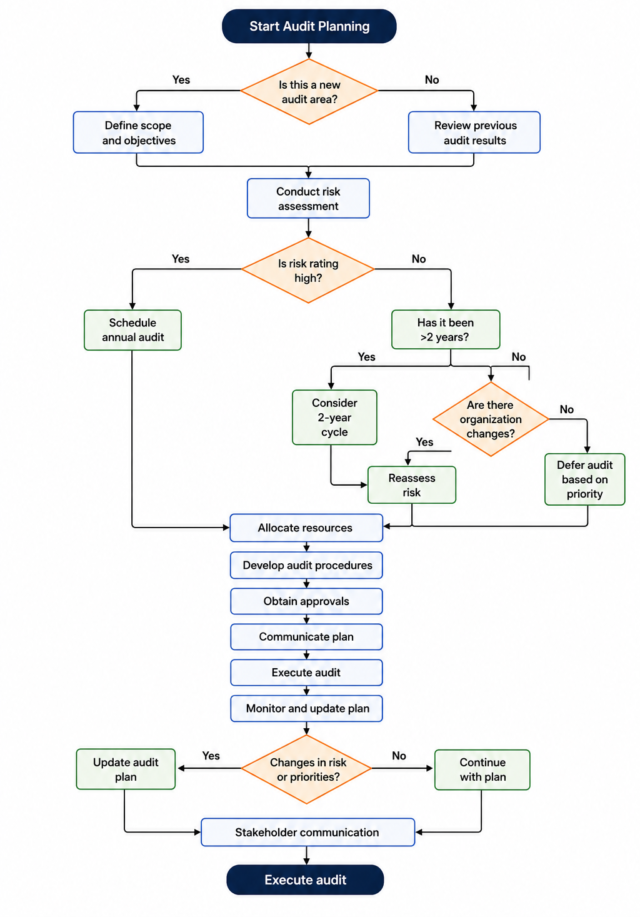
Audit Planning Decision Tree
Frequently Asked Questions (FAQs)
Conclusion
Audit planning is the foundation of effective audit execution. It ensures resources are directed to areas of highest risk and importance. Risk-based planning is essential—focus audit efforts where they can add the most value.
The audit planning process is iterative and dynamic. Continuous updates are necessary as risks and priorities change. Stakeholder engagement is critical—build buy-in and ensure the plan reflects management and board priorities.
Technology transforms audit planning. Real-time risk assessment, automated workflows, and comprehensive visibility enhance effectiveness. Common pitfalls are avoidable—thorough risk assessment, flexibility, coordination, and robust documentation prevent many issues.
Your Next Steps:
- Download the audit plan templates provided in this guide
- Conduct a gap assessment of your current audit planning process
- Identify areas for improvement based on the best practices shared
- Consider implementing audit management software if manual processes are limiting you
- Schedule regular plan reviews to ensure ongoing relevance
Modernize Your Audit Planning Process
Enterprise audit management platforms such as ASPIA, AuditBoard, TeamMate, and MetricStream provide capabilities to plan more efficiently, respond more quickly to risks, and demonstrate greater value to stakeholders.