The client is a large, regulated organization operating across multiple business units and technology environments. The audit function was responsible for managing IT General Controls (ITGC), internal audits, and compliance audits across multiple frameworks and stakeholders. Increasing regulatory scrutiny, expanding audit scope, and dependence on manual processes highlighted the need for a centralized, automated audit management solution to improve efficiency, consistency, and audit readiness.
Key Audit & Regulatory Pressures
- Periodic internal & external audits
- Documented audit trails and control testing
- Regulatory compliance reporting requirements
Operational Challenges in Audit
Lack of centralized Audit visibility
- Audit activities distributed across multiple teams and systems
- Fragmented compliance documentation
- Disconnected risk ratings and reporting
- No consolidated ownership or real-time visibility
Data scattered across spreadsheets, limiting oversight and control.
Manual & Inconsistent Audit Processes
- Manual audit testing and reviews
- Email-based approvals and follow-ups
- Inconsistent audit execution across units
- Remediation and exception tracking gaps
Manual processes slowed execution and reduced audit consistency.
Audit Readiness & Regulatory Pressure
- Delayed audit reviews and issue closure
- Inconsistent risk scoring methodology
- Limited accountability and ownership
- High operational and documentation effort
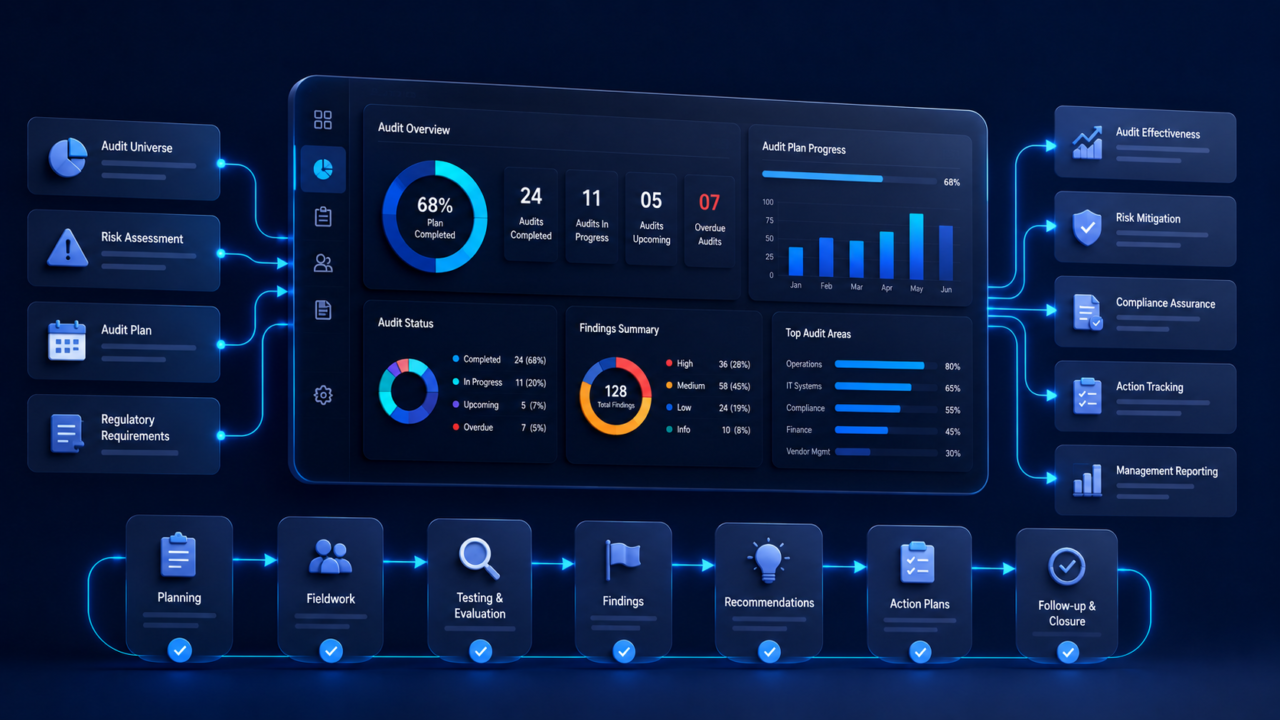
Centralized Audit Management Platform
- Single platform for audit planning and execution
- Centralized evidence repository
- Real-time audit tracking and dashboards
- Consolidated ownership and role-based access
Workflow Automation & Standardization
- Automated task assignments and notifications
- Structured review and approval workflows
- Standardized audit templates and checklists
-
Controlled issue and remediation tracking
Risk-Based Audit & Control Mapping
- Risk-to-control mapping aligned with ITGC
- Framework-based control alignment
- Consistent risk scoring methodology
- Integrated compliance and audit linkage
Business impact & measurable results
Improved Accountability & Audit Oversight
Centralized audit management eliminated scattered data, providing real-time tracking and consolidated ownership across functions.
Faster Remediation Coordination
Workflow automation reduced manual effort and shortened audit timelines by 40–50%, ensuring consistent execution across business units.
Enhanced Audit Readiness & Executive Visibility
Structured evidence management and complete audit trails strengthened compliance posture and improved regulatory preparedness.
Why this matters
In highly regulated industries such as banking and financial services, effective Audit Management is critical for maintaining compliance, governance transparency, and operational resilience.
As regulatory scrutiny increases and audit scope expands, manual audit processes create visibility gaps, delays, and documentation risks.
By operationalizing audit activities through structured ownership, remediation tracking, evidence management, and executive reporting, ASPIA helped the organization move from fragmented audit coordination to a connected audit operating model.
This resulted in improved audit readiness, stronger control oversight, and enhanced regulatory confidence.
Looking to improve audit accountability, remediation coordination, and executive visibility?
ASPIA helps organizations operationalize audit activities through structured ownership, remediation tracking, evidence management, and executive reporting.
Automate audit planning, testing, and execution
Maintain structured, regulatory-compliant audit trails
Standardize issue tracking and remediation workflows
Gain real-time audit visibility across business units